Bone-Deep Tiredness: Honouring Rest in Parenting
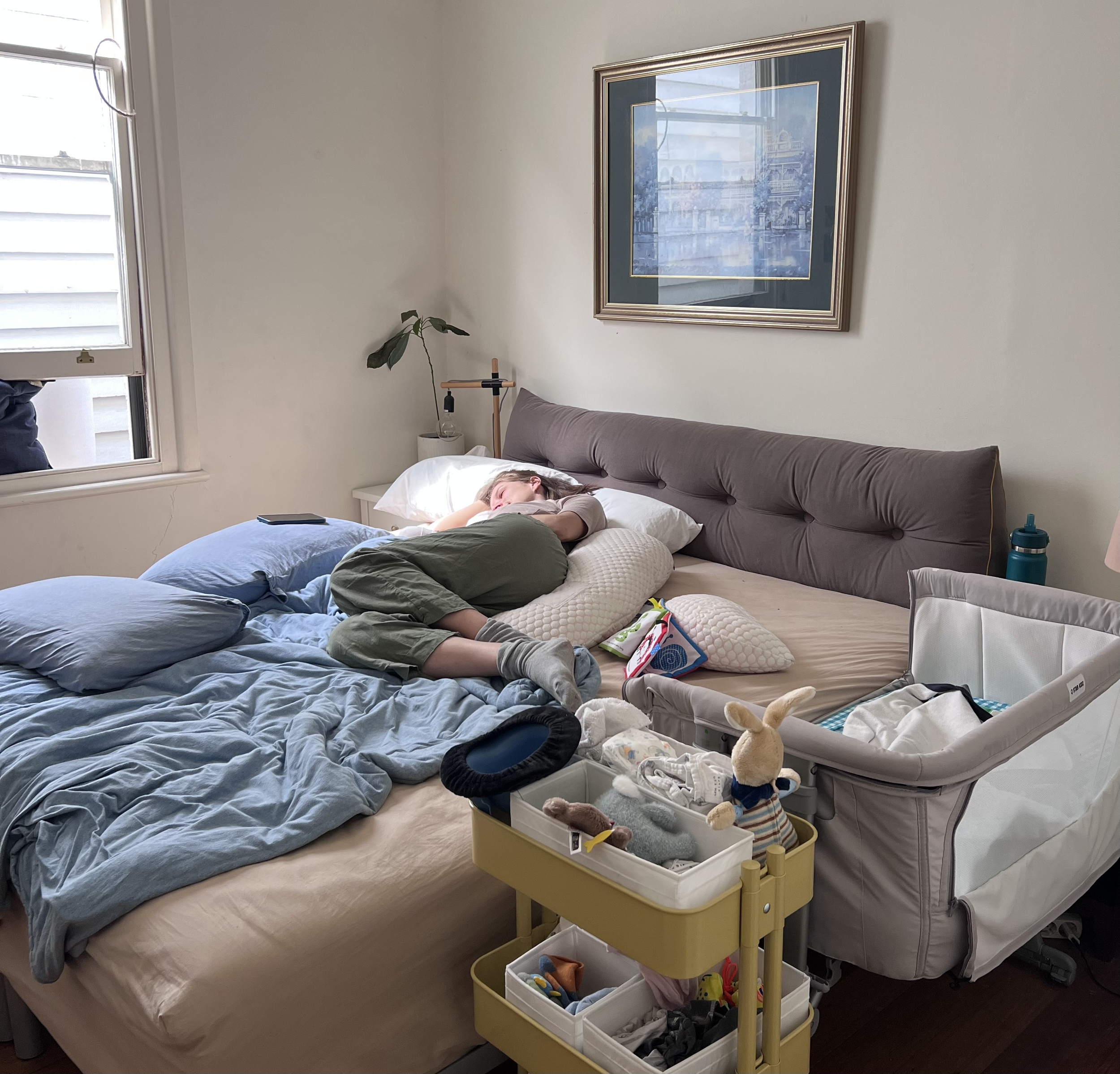
The bone‑deep tiredness that seeps into every part of a new parent’s body is not imagined, and it is not weakness. It is a very real physiological and emotional response to being on call 24 hours a day, moving through short blocks of broken sleep and long stretches of wakeful hours with a baby or toddler who needs you. No one is meant to function like this indefinitely, and yet new parents are often expected to carry on with a smile as though life has changed in all the ways…and none of the ways.
In the early years of parenting, rest becomes both more elusive and more essential. Sleep is no longer an unbroken nightly event but something you collect in scraps: 40 minutes here, 90 minutes there, a doze on the couch while feeding. It can feel like your whole being is wrapped in a fog, and the world expects you to move at your old pace in a completely new season of life.
This is an invitation to name the reality of sleep deprivation, loosen the grip of unrealistic expectations, and explore how to gently support yourself (and the parents you love) through this time.
Tiny rests, not perfect sleep
So much advice for parents centres on getting the baby to sleep, as if the only solution is a perfectly sleeping child. But the nervous system does not only respond to eight tidy hours of night‑time rest; it responds to little pauses, to the moments when you stop doing and allow yourself to soften.
Rest in this season may look like:
• Lying down when your baby sleeps, even if you do not nap.
• Closing your eyes for three minutes while someone else holds the baby.
• Sitting on the floor, leaning against the couch, and letting your shoulders drop while your toddler plays beside you.
• Letting a sink of dishes wait so you can stretch your legs out on the bed and simply breathe.
These small, seemingly not enough moments matter. They send a signal of safe enough to your body. They remind your brain that you are allowed to pause, even in a 24‑hour caring cycle. Rest is not always a separate event away from your child; often, in the early years, rest is woven into the day in tiny, imperfect threads.
Sharing the load
The story that good parents do it all themselves is one of the most exhausting myths of modern parenting. Humans are wired for village life, for shared nights, shared days, shared arms holding babies. When all of that is condensed into one or two adults, it is no wonder that the weight feels overwhelming.
Sharing the load might look like:
• Tag‑teaming evenings and mornings so each adult gets one longer chunk of sleep somewhere in the night or week.
• Asking a friend or grandparent to take the pram for a walk while you lie down, even if just for 20 minutes.
• Hiring extra support if it is available to you: a postpartum doula, night nanny, cleaner, or meal service.
• Letting someone else hold the baby while you shower without listening out for every sound.
Sometimes the hardest part is not the lack of help, but the internal barrier to asking for it. You are allowed to need more hands, more hearts, more presence around you. You are allowed to say: “This is too much for just me.”
Nourishing body and mind
When nights are fractured, it is easy to slip into survival mode where everything feels like another task. The basics-food, movement, light, connection-can be powerful supports when approached gently and without pressure.
Simple practices might include:
• Eating something with protein and complex carbohydrates in the morning to stabilise your energy.
• Stepping outside each day for sunlight on your face, even if it is just on your front step.
• Gentle movement like a slow walk, a few stretches on the living‑room floor, or a handful of grounding breaths.
• Reducing stimulation before your own sleep: dimmer lights, fewer screens, simple bedtime rituals.
Equally important is how you speak to yourself. Exhaustion can amplify self‑criticism: “I should be coping better,” “Everyone else manages,” “I’m failing my baby.” Meeting yourself with the same tenderness you would offer a dear friend-especially in the middle of the night-can soften the edges of this experience. If low mood, anxiety, or intrusive thoughts are sitting alongside your sleep deprivation, this is not a sign you need to try harder; it is a sign you deserve better care and perhaps professional support.
Community and honest conversations
One of the most healing things for a new parent to hear is: “You are not the only one.” Honest conversations about how hard it can feel to function on a 24‑hour clock erode the shame that often wraps around exhaustion.
As a community, supporting new parents can look like:
• Checking in with more than “How’s the baby?” and asking “How are you sleeping?” or “How are you really feeling in your body?”
• Offering practical help instead of vague offers: dropping a meal, folding a basket of washing, taking the older child to the park.
• Speaking truthfully about your own experiences of sleep deprivation if you have them, so parents know they are not alone or “broken.”
This is village work. Every small act of care helps soften the load of those long, wakeful nights and foggy days.
Questions for contemplation
You might like to journal on these, or simply hold them gently in your mind:
1. Where could I allow myself even 5% more rest in this season, if I loosened my expectations of what “has” to get done?
2. If I believed I truly deserved support, what is one small thing I would ask for-or say yes to-this week?
You are not meant to move through the early years of parenting as if you are unchanged. Your body, mind, and heart are doing enormous work. May rest, in all its small and imperfect forms, find its way to you.